Many business owners think of their website as a project they completed years ago.
The website was launched, a few pages were added, and that was that.
But here’s the problem: your website isn’t a brochure sitting in a drawer. It’s often the first interaction potential customers have with your business. And if that first impression is outdated, slow, or difficult to use, it could be costing you far more than you realize. An outdated website can deter potential clients from engaging with your services.
The cost isn’t always obvious. You won’t receive an email saying, “I decided not to contact you because your website looked old.” Most people simply leave and move on to a competitor.
That’s why the true cost of an outdated website often goes unnoticed.
Customers Judge Your Business Faster Than You Think
Imagine you’re looking for a local contractor, accountant, lawyer, dentist, or marketing agency.
You search online and open two websites.
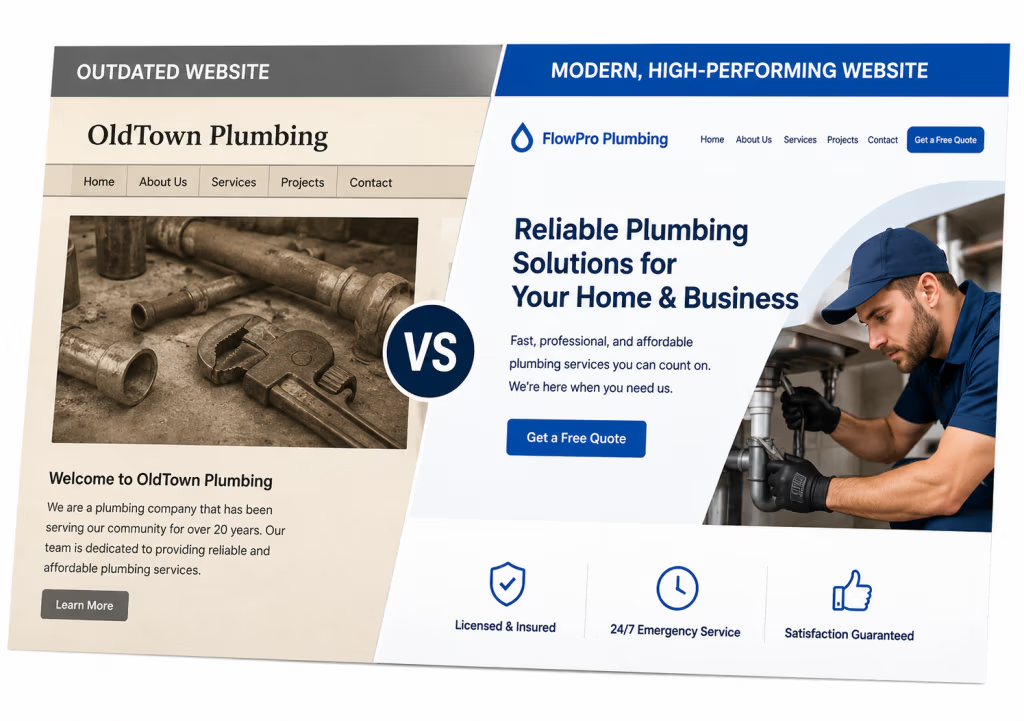
The first website loads quickly, looks professional, works perfectly on your phone, and clearly explains the services offered.
The second website looks like it hasn’t been updated in years. The text is difficult to read, images are outdated, and some pages don’t work properly.
Which business would you trust?
Most people choose the first one without thinking twice.
Whether we like it or not, customers often judge a business based on its online presence. A modern website suggests professionalism, attention to detail, and reliability. An outdated website can unintentionally send the opposite message.
Lost Leads Mean Lost Revenue
Many businesses focus on generating traffic but overlook what happens after visitors arrive.
A website’s job is not simply to exist. Its job is to convert visitors into customers.
If your website is difficult to navigate, loads slowly, lacks clear calls-to-action, or doesn’t answer common customer questions, potential leads may leave before contacting you.
Even losing a few leads each month can have a significant impact on annual revenue.
For example, if your average customer is worth $1,000 and your outdated website causes you to lose just two customers per month, that’s $24,000 in lost revenue every year.
Most business owners would immediately invest in improvements if they knew those numbers in advance.
Your Competitors Are Improving While You Stand Still
One of the biggest risks isn’t that your website is getting worse.
It’s that your competitors are getting better.
Businesses today invest heavily in their online presence. They redesign websites, improve user experience, publish helpful content, and optimize for search engines.
Meanwhile, many older websites remain exactly as they were five or ten years ago.
Customers naturally compare options before making decisions. When competitors present themselves better online, they often appear more trustworthy and more established—even when the quality of their service is similar.
In many industries, the website that creates the strongest first impression wins the opportunity.
Google Prefers Active Websites
Search engines want to provide users with relevant, accurate, and up-to-date information.
A website that hasn’t been updated in years sends a signal that the business may not be actively maintaining its online presence.
Regular website updates, fresh content, new service pages, blog articles, and technical improvements help search engines understand that your business remains active and relevant.
This doesn’t mean you need to publish content every day.
However, websites that are regularly maintained often perform better in search results than websites that are left untouched for years.
The result is more visibility, more traffic, and more opportunities to generate leads.
Mobile Visitors Have Little Patience
More people now browse websites on phones than on desktop computers.
Yet many business websites were built during a time when mobile devices were an afterthought.
If visitors need to zoom in to read text, struggle to click buttons, or wait for pages to load, they’ll likely leave within seconds.
And unlike traditional advertising, you rarely get a second chance.
A poor mobile experience doesn’t just frustrate users—it directly impacts your ability to attract and convert customers.
Security Risks Continue to Grow
Outdated websites often rely on older software, plugins, and themes that may contain vulnerabilities.
Hackers actively search for websites that aren’t properly maintained because they are easier targets.
A hacked website can lead to downtime, malware warnings, lost customer trust, and expensive recovery costs.
Regular website maintenance helps protect your business, your reputation, and your customers.
Security updates may not seem exciting, but they’re one of the most important investments you can make in your online presence.
Your Website Should Grow With Your Business
Businesses evolve.
You add services, refine your processes, enter new markets, and learn more about your customers.
Your website should evolve too.
Unfortunately, many websites no longer reflect the business behind them. Services are missing, team members have changed, contact information is outdated, and opportunities to answer customer questions are overlooked.
When your website grows alongside your business, it becomes a powerful sales and marketing tool rather than a static online brochure.
The Real Cost Isn’t the Redesign
Many business owners worry about the cost of redesigning a website.
But the better question is this:
What is the cost of keeping an outdated one?
How many potential customers have visited your website and left?
How many leads have gone to competitors?
How much trust have you lost before a conversation even began?
These costs are difficult to measure, but they are very real.
A professional website isn’t just a business expense. It’s an investment in credibility, visibility, customer experience, and long-term growth.
Final Thoughts
Your website works around the clock.
It represents your business when you’re sleeping, spending time with family, meeting clients, or focusing on daily operations.
When it’s modern, fast, secure, and regularly updated, it can become one of your most valuable business assets.
When it’s outdated, it may quietly cost you opportunities every single day.
If you haven’t evaluated your website in several years, now might be the perfect time to ask a simple question:
Is my website helping my business grow—or holding it back?